Sol y sombra.
La ubicación del edificio al sur del terreno, sobre la calle perimetral proyectada y perpendicular a la futura estación ferroviaria, responde a la oportunidad de conformar un espacio verde continuo de dimensiones considerables, un gran jardín de distintos tonos y texturas que varían con las estaciones del año. Recorrible a través de caminos lineales de sombra, logrados por la sucesión de árboles que filtran el sol. Un sistema de premoldeados de hormigón conforma solados, bancos, equipamiento, lugares estancos dentro de la trama.
El edificio de la estación terminal de ómnibus es el límite visual del parque y tiene una relación franca con la red peatonal desde el centro de la cuidad de Concepción. La estrecha distancia entre la futura estación ferroviaria y la terminal, logra la interacción deseada vinculando ambas a través de una calle vehicular. El estacionamiento (ampliable a futuro), se ubica de manera de satisfacer a ambos edificios y a la característica multimodal de trasbordo del área.
La búsqueda principal del edificio en respuesta al clima subtropical y a las altas temperaturas de la zona, es la sombra.
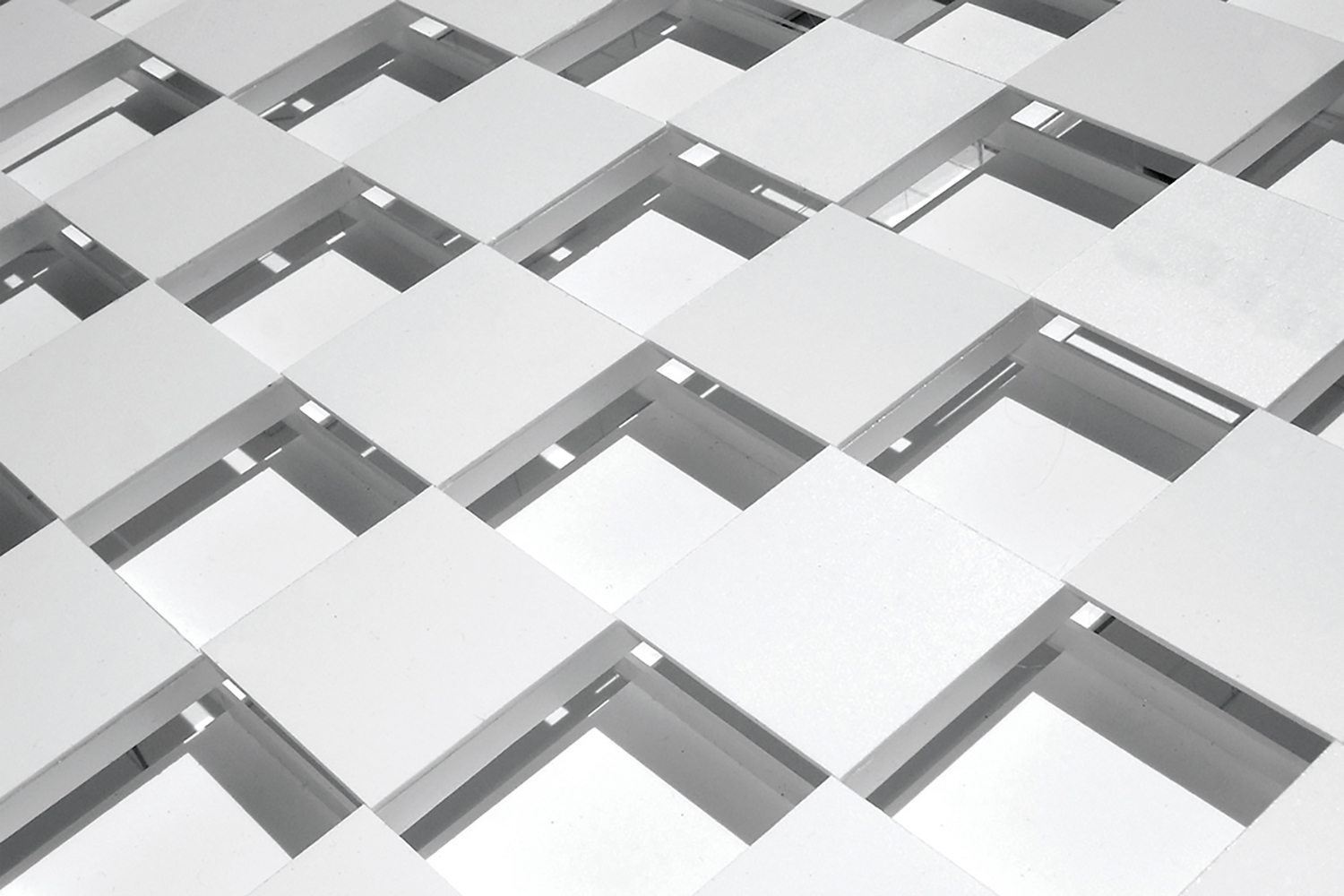
Una cubierta sencilla de columnas y vigas metálicas apoyadas unas sobre otras, logran un ambiente interior donde “el sol y la sombra” son los protagonistas.
Una serie de patios, ubicados estratégicamente conforman el recorrido del edificio generando un juego de transparencias donde se confunde el interior con el exterior. El preembarque en el centro, punto de mayor transparencia, diferencia claramente la zona comercial, la espera y la zona de ventas de pasajes, empresas y administración.
El edificio, al oeste en su lado mas corto, sirve de semicubierto de ascenso y descenso de pasajeros de vehículos y ómnibus de línea, generando un acceso resguardado del sol y las lluvias, directamente vinculado con la estación de ferrocarril. En su lado mas largo, una galería continua al norte, lo relaciona directamente con el parque, donde expande el área comercial que al mismo tiempo se utiliza como equipamiento del espacio público y de la terminal. Al sur, se ubican las dársenas y la playa de maniobras, separando a los ómnibus del paisaje, y liberando su circulación hacia la calle posterior proyectada de relación directa con las rutas. Al este, el edificio permite extenderse libremente, ampliando su capacidad de empresas y dársenas.
La estructura se resuelve a través de una trama de columnas y vigas reticuladas metálicas, solución accesiblemente económica y de rápida ejecución, para salvar las luces necesarias, con cubiertas de chapa continua con sus aislaciones. Los desagües, resueltos cada dos módulos de cubierta, se ubicaran en el interior de las columnas. Estos contemplan la intensidad de las lluvias de la zona y mediante pasarelas accesibles, posibilitarán la limpieza periódica de la cubierta.
Las carpinterías serán de aluminio blanco, los pisos de granítico blanco y los tabiques divisorios en seco con revestimiento exterior en chapa prepintada blanca. La elección de estos materiales está en relación al menor costo de mantenimiento y mayor vida útil.
Aprovechando el desnivel existente entre la altura de la ruta nacional 365 y el terreno, el edificio responde con una quinta fachada. La vista superior de la cubierta, durante el día es resultado de una trama de sombras, mientras que de noche el efecto inverso genera una trama de luces hacia el exterior. Esto hace del edificio un punto de referencia para la ubicación de la ciudad de Concepción.
Sun and shadow.
The location of the building on the southern edge of the site, along the projected perimeter street and perpendicular to the future railway station, responds to the opportunity to create a continuous green space of considerable dimensions: a large garden of different tones and textures that vary with the seasons. It is crossed by linear shaded paths, produced by successive rows of trees that filter the sun. A system of precast concrete elements defines pavements, benches, equipment and contained places within the grid.
The bus terminal building forms the visual limit of the park and establishes a direct relationship with the pedestrian network from the center of the city of Concepción. The short distance between the future railway station and the terminal achieves the desired interaction, linking both through a vehicular street. The parking area, expandable in the future, is located to serve both buildings and the multimodal transfer condition of the area.
The main search of the building, in response to the subtropical climate and the high temperatures of the region, is shade.
A simple roof of steel columns and beams resting upon one another creates an interior atmosphere where “sun and shadow” are the protagonists.
A series of strategically located courtyards shapes the route through the building, generating a play of transparencies where interior and exterior become confused. The pre-boarding area at the center, the point of greatest transparency, clearly differentiates the commercial area, the waiting area, ticket sales, bus companies and administration.
On its shorter western side, the building acts as a semi-covered area for passenger drop-off and pick-up by cars and buses, generating an access protected from sun and rain and directly linked to the railway station. Along its longer northern side, a continuous gallery relates directly to the park, extending the commercial area, which at the same time operates as equipment for both the public space and the terminal.
To the south are located the bus bays and maneuvering area, separating buses from the landscape and freeing their circulation towards the projected rear street directly connected to the routes. To the east, the building can extend freely, increasing its capacity for companies and bays.
The structure is resolved through a grid of steel columns and lattice beams, an economical and rapidly executable solution for spanning the required distances, with continuous sheet-metal roofs and insulation. Drainage, resolved every two roof modules, is located inside the columns. These drains respond to the intensity of rainfall in the area and, through accessible walkways, allow periodic cleaning of the roof.
The window frames are white aluminum, the floors are white granolithic, and the dry partition walls have exterior cladding in white pre-painted sheet metal. The selection of these materials responds to lower maintenance costs and longer service life.
Taking advantage of the existing level difference between National Route 365 and the site, the building responds with a fifth façade. During the day, the upper view of the roof results from a grid of shadows, while at night the opposite effect generates a grid of lights towards the exterior. This turns the building into a reference point for locating the city of Concepción.
Arquitectos / Architects: Antonio Carrasco · Javier Esteban · Ligia Gaffuri · Martín Torrado · Colaborador / Collaborator: Carlos Carrasco · Concurso / Competition: Primer premio · Situación / Location: Concepción, Tucumán, Argentina · Proyecto / Project: 2005 · Superficie / Area: 6000 m² terminal de ómnibus · 10 ha parque público